Complete Automotive Fasteners Guide: Grades, Thread Types & How to Choose Them for OEM & Aftermarket
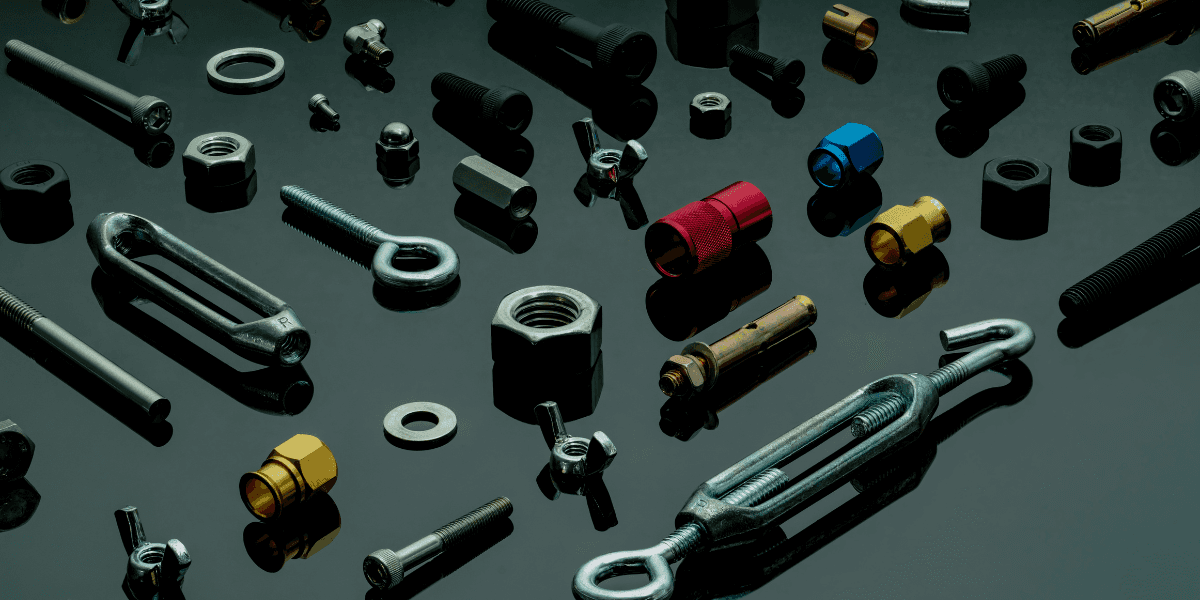
Automotive fasteners aren’t “just bolts.” In a vehicle, a fastener is part of the engineering: it creates clamp load (the squeezing force that keeps parts from moving), survives vibration, handles heat cycles, resists corrosion, and in safety-critical systems, helps protect lives. That’s why choosing the right fastener for OEM replacement or aftermarket upgrades means looking beyond diameter and length.
In this guide, we’ll cover the fastener grades you’ll see in the market (SAE and Metric), the thread systems (UNC/UNF/metric), common automotive fastener types, coatings, and a practical checklist so you can select the right hardware with confidence.
Why this matters for OEM + aftermarket
OEM fasteners are often chosen for a specific combination of:
strength (tensile and yield)
hardness (wear and deformation resistance)
thread pitch (how the load spreads across threads)
head style (flange/washer face to distribute load)
coating (corrosion protection + controlled friction for predictable torque)
Aftermarket work introduces new variables, like lift kits, skid plates, turbo upgrades, exhaust changes, so the “right fastener” often means matching OEM where required and upgrading appropriately where the load/conditions change.
Fastener Grades in Automotive: SAE vs Metric (and what the numbers really mean)
Fastener grade is essentially a shorthand for strength and heat treatment. Higher grades usually mean higher tensile strength and better resistance to stretching under load. But a higher grade doesn’t automatically mean “better everywhere,” it must match the joint design and torque method.
SAE grades (inch/imperial)
SAE bolts are typically identified by radial lines on the head:
SAE Grade 2 (no lines)
Low-strength carbon steel.
Common uses: trim, interior brackets, light-duty body hardware.
SAE Grade 5 (3 lines)
Medium carbon steel, quenched and tempered.
Common uses: many chassis brackets, moderate-load mounts.
SAE Grade 8 (6 lines)
High-strength alloy steel.
Common uses: higher-stress chassis areas, drivetrain brackets, some suspension hardware (when specified).
Metric property classes (ISO)
Metric bolts are stamped with numbers like 8.8, 10.9, 12.9:
5.8
Lower strength.
Common uses: interiors, light brackets.
8.8
Very common OEM standard for general structural use.
Common uses: chassis, brackets, mounts.
10.9
High strength is common in modern vehicles.
Common uses: engine bay hardware, suspension/steering areas (depending on model).
12.9
Very high strength, often seen in socket-head cap screws and compact high-clamp joints.
Common uses: specialized high-torque applications (often performance/engine-focused).
Rule for OEM replacement: If you’re replacing a factory bolt, match the head marking/property class unless a service manual explicitly allows a substitute.
Thread Types: UNC vs UNF vs Metric (and why pitch matters)
The thread type determines how the load is carried and how resistant the fastener is to vibration, stripping, and damage.
UNC (Unified National Coarse)
Coarse thread = fewer threads per inch (TPI).
Pros: easier assembly, more tolerant of dirt/paint, better in softer materials.
Typical use: cast iron, aluminum housings, general service positions.
UNF (Unified National Fine)
Fine thread = more threads per inch.
Pros: often better clamp control, more thread engagement per length, can resist loosening in some applications.
Cons: easier to cross-thread, more sensitive to damaged threads.
ISO Metric threads
Modern vehicles are heavily metric. Metric threads are specified as M diameter × pitch, for example:
M10 × 1.5
M8 × 1.25
A common mistake is swapping a close-but-not-correct pitch (like M10×1.25 vs M10×1.5). It may start threading, then gall or fail under load.
Common Automotive Fastener Types (what they’re used for)
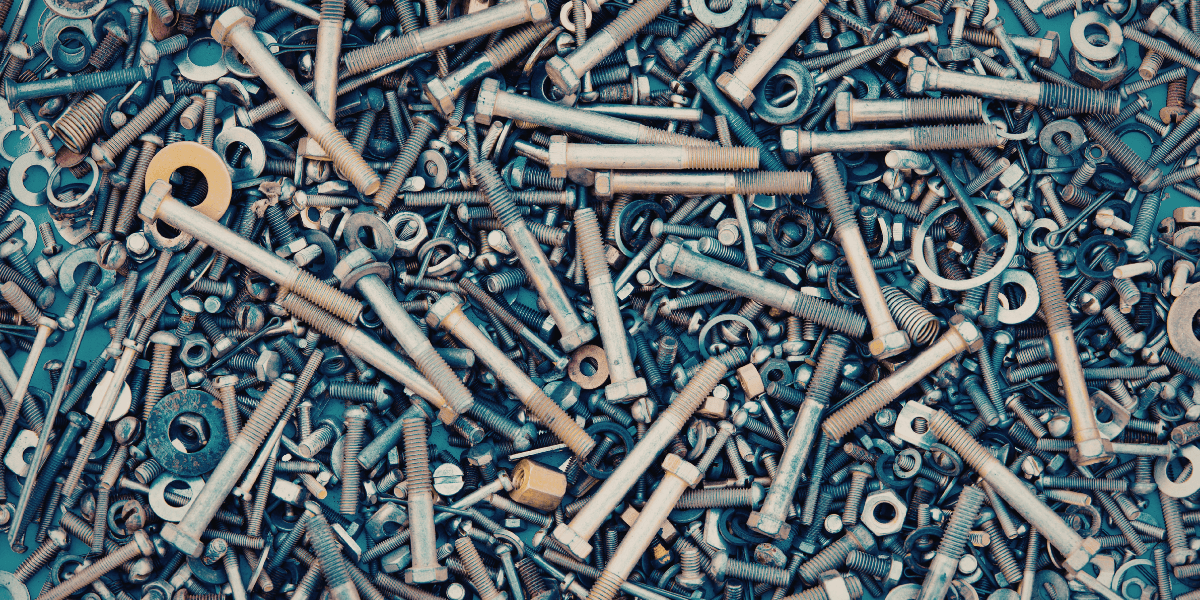
Hex head bolts and flange bolts
Hex bolts are everywhere, but flange bolts are especially common in automotive because the built-in flange spreads the load and can replace a separate washer.
Where you’ll see them: subframes, brackets, engine mounts, suspension mounting points (when specified).
Socket head cap screws (Allen)
High strength in tight spaces, common in engines and aftermarket performance parts.
Studs and nuts
Studs protect threads in expensive components and make alignment easier.
Where you’ll see them: exhaust manifolds, turbo hardware, and some suspension/axle setups.
U-bolts
Designed to clamp round components or leaf springs.
Where you’ll see them: leaf spring suspension, exhaust clamping in some setups.
Locking nuts and specialty nuts
Vibration is constant in vehicles, so anti-loosening hardware matters:
Nylon-insert lock nuts (Nyloc): great for many chassis areas, but nylon can degrade with heat
All-metal lock nuts: better for higher heat zones (like exhaust proximity)
Castle nuts with cotter pins: mechanical locking, common on certain steering/suspension designs
Materials & coatings: corrosion protection vs heat vs torque consistency
Common materials
Carbon steel: standard automotive strength, usually needs coating
Alloy steel: used for higher-grade fasteners (Grade 8, 10.9, 12.9)
Stainless steel: great for corrosion resistance, but not automatically equivalent in strength to high-grade alloy bolts. Also can gall (seize), especially without anti-seize.
Common coatings
Zinc plating: general corrosion resistance, common across automotive
Yellow zinc: typically higher corrosion performance, recognizable gold-ish tint
Phosphate coating: good lubricity, often used with oil; common in engine bay and internal applications
Geomet/Dacromet-style coatings: high corrosion resistance and popular for OEM-style underbody protection
Important torque note: Coating and lubrication affect friction. Changing from dry phosphate to lubricated zinc (or adding anti-seize) can change the clamp load at the same torque. When possible, follow OEM torque specs and installation notes (dry vs lubricated).
How to choose the right fastener for OEM & aftermarket (simple checklist)
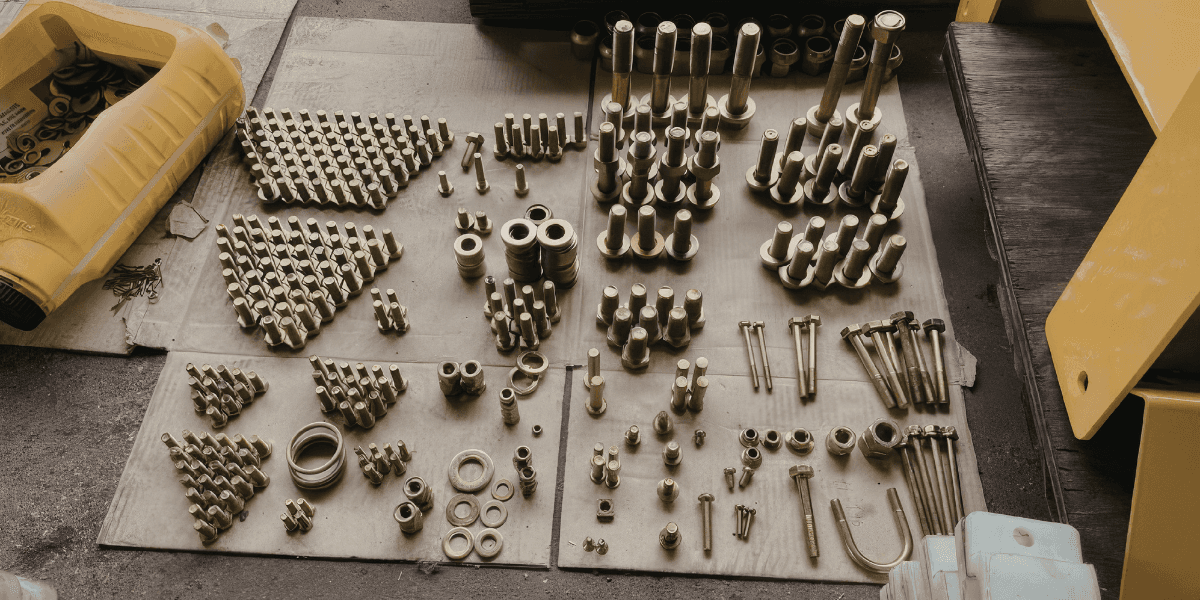
Use this every time you’re selecting or replacing automotive fasteners:
Step 1: Identify the application risk
Safety-critical: brakes, steering, suspension, wheel hubs, seat belts, drivetrain mounts
In these areas, match OEM spec exactly unless you have a verified engineering-approved substitute.
Step 2: Match grade/property class
Never downgrade. If OEM used 10.9, don’t replace with 8.8 “because it’s available.”
Step 3: Match the thread system and pitch
UNC vs UNF vs metric must match
Verify pitch with a gauge when possible
Step 4: Match geometry
Pay attention to:
head type (hex vs flange vs socket)
flange diameter/washer face
shank length (unthreaded portion)
overall length and thread length
A bolt with the wrong shank length can shift shear loads onto threads, weakening the joint.
Step 5: Choose a coating for the environment
Underbody + road salt: prioritize corrosion resistance
Engine bay: consider heat cycling + corrosion
Exhaust zone: consider heat + all-metal locking solutions
Step 6: Use the right locking method
If OEM used a:
prevailing torque lock nut
threadlocker patch
washer stack
cotter pin
match that strategy. Don’t “double up” randomly (like threadlocker + nyloc) unless you know it’s compatible.
Common fastener mistakes (and how to avoid expensive failures)
Mixing thread pitch (starts threading, then strips the hole)
Over-torquing in aluminum (pulling threads or cracking housings)
Replacing flange bolts with standard hex bolts (reduced bearing surface, joint loosening)
Using stainless for structural loads without verifying strength equivalency
Reusing one-time-use bolts (common in some engine and chassis systems)
Ignoring corrosion (rust reduces effective cross-section and can change torque behavior)
Have any questions? Contact us.
Frequently Asked Questions
Are Grade 8 bolts always better than Grade 5?
Not automatically. Grade 8 is stronger, but the correct choice depends on OEM design, clamp load needs, and torque procedure. For replacements, matching the OEM grade is the safest move.
What’s the most common metric bolt grade on modern vehicles?
You’ll commonly see 8.8 and 10.9 across chassis and engine bay applications.
Should I use coarse or fine thread in automotive applications?
Coarse (UNC) is often better in softer materials and for serviceability; fine (UNF) is common in precision/high-stress joints. Always match what the part is threaded for, don’t swap pitch.
Can I replace a flange bolt with a regular hex bolt and a washer?
Sometimes, but not as a default. Flange bolts are designed to spread the load and resist embedment. If the joint was engineered around a flange head, replacing it may change clamp behavior.
Are nylon lock nuts okay in the engine bay?
They can be, but avoid them near high heat (exhaust/turbo areas). Heat can reduce nylon’s locking performance, so use all-metal lock nuts where temps are high.
What coating is best for underbody fasteners?
For salt and moisture exposure, look for stronger corrosion-resistant coatings (often OEM-style systems). Zinc is common; advanced coatings can perform better long-term.
How do I identify an SAE vs metric bolt quickly?
SAE uses radial lines on the head; metric uses numbers like 8.8 or 10.9.

Looking for more than just parts?
Explore how our services are reshaping what support means in this industry.